Apple iPhone 18 Pro Leak: What We Know So Far
Introduction
Apple is one of the world’s most secretive technology companies. Every year, millions of people eagerly wait for new iPhone announcements, yet details often surface months before the official launch. Most of these leaks come from supply chain insiders, prototype testing, or manufacturing partners.
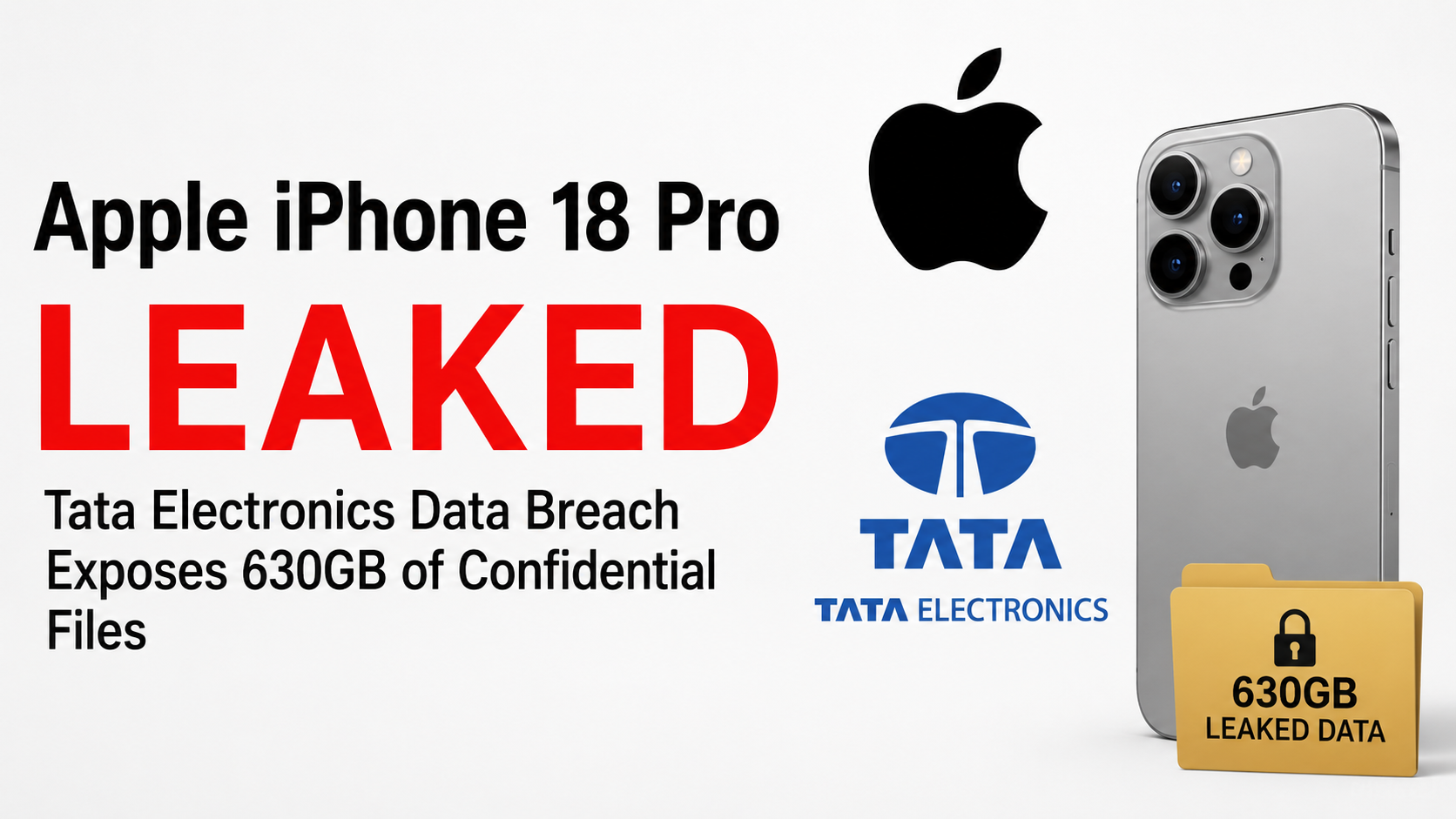
Recently, reports claimed that Tata Electronics, one of Apple’s major manufacturing partners in India, experienced a cybersecurity incident. According to these reports, over 630 GB of confidential data was allegedly leaked online, including files that reportedly referenced Apple’s upcoming hardware, supplier documentation, CAD models, internal components, and possible images of the unreleased iPhone 18 Pro.
Although many of these claims remain unverified and Apple has not publicly confirmed every reported detail, the incident has sparked widespread discussion across the technology community. It also raises important questions about supply chain security, data protection, and how leaks affect one of the world’s most valuable companies.
This article explores what has been reported, why such leaks matter, and what they could mean for Apple, its suppliers, and consumers.
What Is the Reported Apple Leak?
Reports circulating online suggest that hackers gained unauthorized access to systems associated with Tata Electronics, an important Apple manufacturing partner in India.
The leaked material reportedly included:
- Internal component designs
- Alleged iPhone 18 Pro hardware information
- Camera module details
- Battery specifications
- 3D engineering models
- Supplier documentation
- Manufacturing information
- Internal product images
If authentic, these files represent highly confidential information typically shared only between Apple and its trusted manufacturing partners.
However, it’s important to note that not every file circulating online has been independently verified, and leaked materials can sometimes be outdated, altered, or incomplete.
Who Is Tata Electronics?
Tata Electronics has become one of Apple’s most important manufacturing partners in India.
As Apple continues to diversify its production beyond China, India has emerged as a major manufacturing hub.
Tata Electronics is involved in:
- iPhone assembly
- Component manufacturing
- Supply chain operations
- Quality testing
- Export production
Apple’s investment in India’s manufacturing ecosystem has grown significantly over the past few years, making supplier security more important than ever.
What Data Was Allegedly Exposed?
According to reports, the leaked archive exceeded 630 GB and reportedly contained engineering and manufacturing documents.
Among the alleged files were:
CAD Models
Computer-aided design (CAD) models help manufacturers produce components with precise measurements.
If genuine, these files could reveal:
- Internal layouts
- Structural design
- Component placement
- Manufacturing tolerances
Camera Information
Camera modules are among Apple’s most closely guarded secrets because they often introduce major hardware improvements.
Leaks reportedly included:
- Sensor layouts
- Camera housing
- Internal mounting structures
Battery Details
Battery specifications can reveal:
- Capacity
- Design changes
- Internal placement
- Charging architecture
Supplier Documentation
Manufacturing partners exchange thousands of confidential documents covering:
- Production schedules
- Component suppliers
- Engineering revisions
- Assembly instructions
Such information is commercially sensitive and protected by strict confidentiality agreements.
Why Supplier Data Is Highly Confidential
Apple invests billions of dollars annually in research and development.
Keeping product details confidential allows the company to:
- Surprise customers during launches
- Protect intellectual property
- Prevent competitors from copying innovations
- Maintain marketing impact
- Secure relationships with suppliers
A leak can reduce the excitement of product announcements and expose years of engineering work before launch.
Why Apple Leaks Happen So Often
Apple works with hundreds of suppliers worldwide.
Its supply chain spans:
- Component manufacturers
- Assembly plants
- Logistics providers
- Testing facilities
- Packaging companies
Every additional company involved creates another potential security risk.
Many well-known Apple leaks originate from:
- Manufacturing documents
- Regulatory filings
- Supply chain insiders
- Prototype testing
- Unauthorized photography
This is why leaks have become an almost annual occurrence.
Could the Leaked Information Be Genuine?
Not every leak circulating on social media is authentic.
Experts generally look for:
- Consistency with previous reports
- Metadata
- Engineering terminology
- Supplier documentation
- Independent confirmations
Sometimes leaked images are real.
Sometimes they show early prototypes.
Sometimes they are entirely fabricated.
Until Apple officially announces a product, every leak should be treated cautiously.
How Apple Responds to Leaks
Apple has a long history of aggressively protecting confidential information.
Its responses may include:
- Copyright removal requests
- Legal notices
- Internal investigations
- Supplier audits
- Security reviews
When confidential material appears online, Apple often works quickly to have it removed from websites and social media platforms.
However, once files spread across the internet, complete removal becomes extremely difficult.
Will This Affect Apple’s Product Launch?
Probably not significantly.
Apple has experienced numerous leaks over the years, including details about:
- iPhone designs
- MacBooks
- Apple Watches
- Vision products
Despite these leaks, Apple’s launch events continue to attract millions of viewers worldwide.
Most consumers still wait for official confirmation before making purchasing decisions.
Impact on Tata Electronics
If the reported breach is confirmed, Tata Electronics could face several challenges.
Potential consequences include:
- Security investigations
- Stronger cybersecurity requirements
- Internal audits
- Compliance reviews
- Reputation concerns
For manufacturing partners working with global companies like Apple, maintaining strong cybersecurity standards is essential.
Impact on Consumers
Most consumers are unlikely to be directly affected.
However, leaks can:
- Reveal upcoming features early
- Reduce launch surprises
- Spread misinformation
- Create unrealistic expectations
Readers should rely on official announcements before assuming leaked information is final.
Cybersecurity Lessons
This incident highlights an important reality.
Even the world’s largest technology companies depend on extensive supplier networks.
Strong cybersecurity practices should include:
- Multi-factor authentication
- Employee security awareness
- Network monitoring
- Access control
- Encryption
- Regular security audits
- Incident response planning
Supply chain security has become just as important as product security.
Expert Tips
- Treat every leak as unofficial until confirmed.
- Follow reputable technology journalists instead of random social media accounts.
- Understand that prototypes often differ from final products.
- Don’t make purchasing decisions based solely on rumors.
- Be cautious of fake leaks generated using AI.
Common Mistakes
Many readers:
- Assume every leak is authentic.
- Believe prototype designs are final.
- Share unverified information online.
- Ignore official statements.
- Confuse concept renders with genuine engineering files.
Frequently Asked Questions
Was Apple hacked?
Current reports primarily reference an alleged breach involving a manufacturing partner rather than Apple’s own internal systems.
Was the iPhone 18 Pro fully leaked?
Reports claim confidential materials were exposed, but not all circulating files have been independently verified.
Why are Apple products leaked every year?
Apple works with a vast global supply chain, increasing the possibility of information escaping before launch.
Will Apple delay the iPhone because of this?
There is no evidence that the reported leak will change Apple’s release schedule.
Are leaked images always accurate?
No. Some leaks prove accurate, while others are outdated prototypes or fabricated images.
Why does Apple try to remove leaked content?
To protect intellectual property, maintain secrecy, and preserve the impact of product launches.
Does this affect current iPhone users?
No. The reported incident concerns manufacturing information rather than consumer devices.
Key Takeaways
- Reports claim a major data breach affected Tata Electronics, an Apple manufacturing partner.
- The leaked archive allegedly included confidential engineering documents and possible iPhone 18 Pro information.
- Apple has not publicly confirmed every reported detail.
- Supply chain security remains one of the biggest cybersecurity challenges in modern manufacturing.
- Consumers should treat all leaks cautiously until official announcements are made.
Conclusion
Apple’s product launches are built on secrecy, making any reported leak a major topic of discussion. Whether the alleged Tata Electronics breach ultimately proves to be as extensive as early reports suggest or not, it serves as a reminder of how vulnerable even sophisticated global supply chains can be to cybersecurity threats.
For Apple, protecting intellectual property extends far beyond its own offices—it depends on every supplier maintaining rigorous security standards. While leaks may generate excitement and speculation, they rarely tell the complete story. Until Apple unveils its next-generation devices, the most reliable information will continue to come from its official announcements.